Descriptive & Inferential Statistics
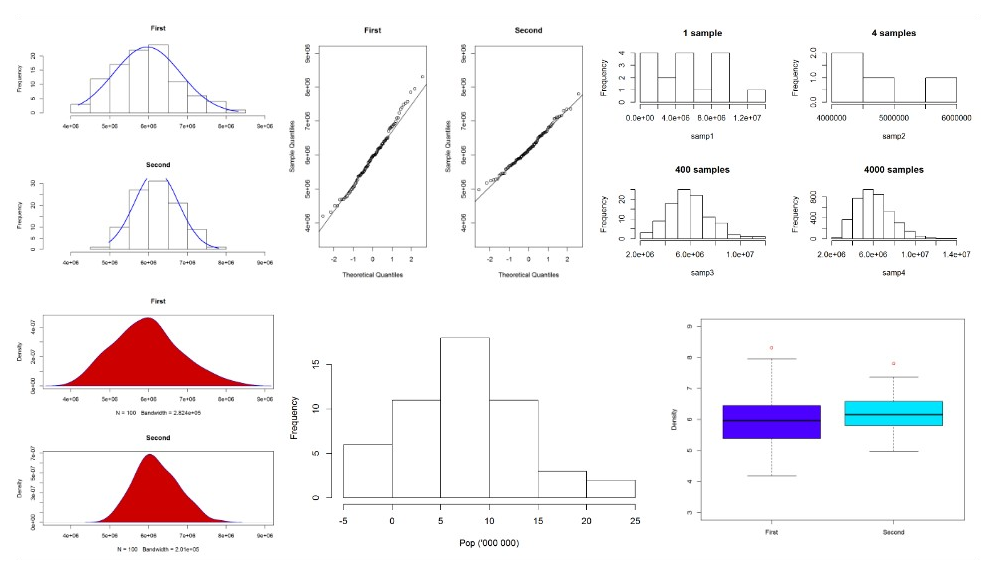
Topics: basic to advanced statistical methods. Analyze census data (US state population). Infer the population with sampling and bootstrapping. Simulations and Monte Carlos.
Code: R / Tool: RStudio
Analysing US census data
Inference, sampling and bootstrapping.
Consult the case in a new tab (Show/Hide All Code in the case upper-right corner).
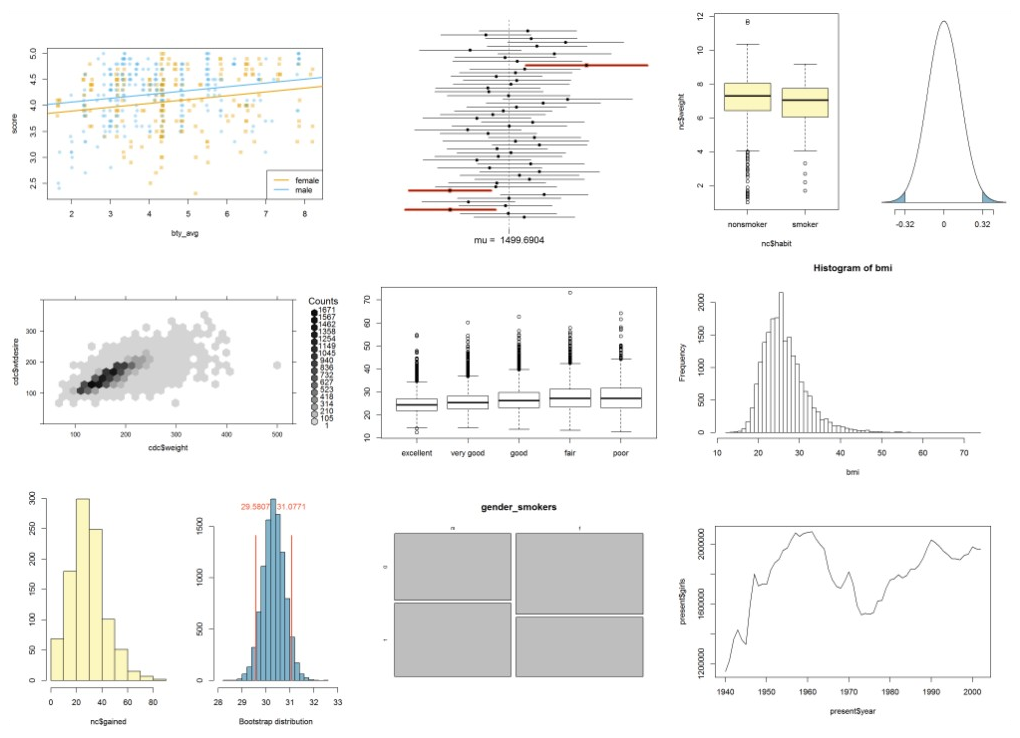
Data analysis and statistical inference
Assessing probabilities, sampling distributions, building confidence intervals, resampling from the sample (bootstrapping), and running regressions.
Consult the series of mini-cases in a new tab (Show/Hide All Code in the case upper-right corner) and notes about custom functions used in the cases (Show/Hide All Code in the case upper-right corner).
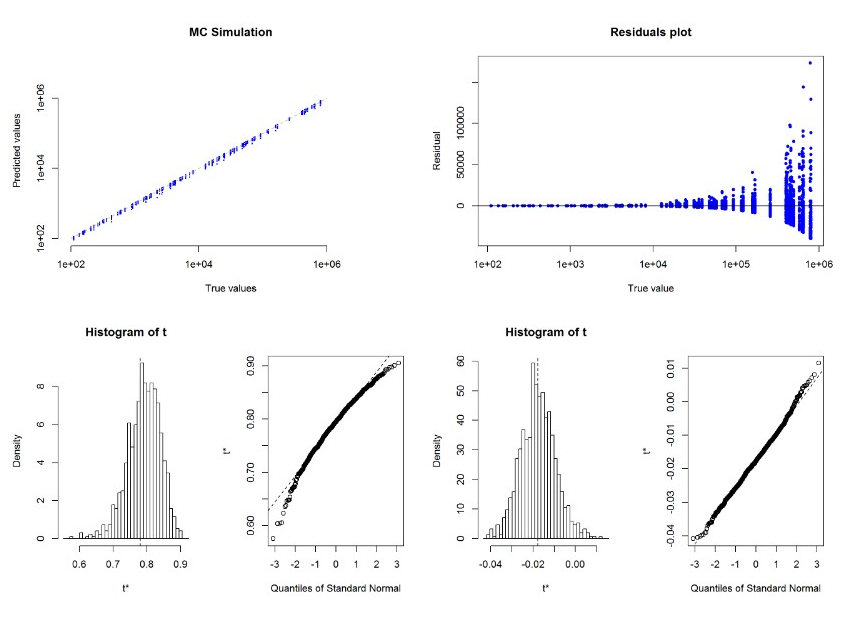
Simulation, bootstrapping, and Monte Carlos
- Bootstrapping on an equation: N = m + M/k - 1.
- Using samples to assess the total number of unit produced (the population).
- Assessing Tank Production during WWII (as an illustration).
- Consult the mini-case in a new tab (Show/Hide All Code in the case upper-right corner).
- Bootstrapping on a regression formula: lm(mpg ~ wt + disp, data = mtcars).
- Consult the note in a new tab (Show/Hide All Code in the case upper-right corner).
- Consult the note in a new tab (Show/Hide All Code in the case upper-right corner).
“Pull oneself up by one’s bootstraps (or by one’s pigtail).”
In 1968, Hans Albert coined the term “Münchhausen trilemma” to describe the philosophical problem inherent in having to derive conclusions from premises; those premises have to be derived from still other premises, and so on forever, leading to an infinite regress interruptible only by circular logic or dogmatism. The problem is named after the similarly paradoxical story in which the Baron saves himself from being drowned in a swamp by pulling on his own hair.